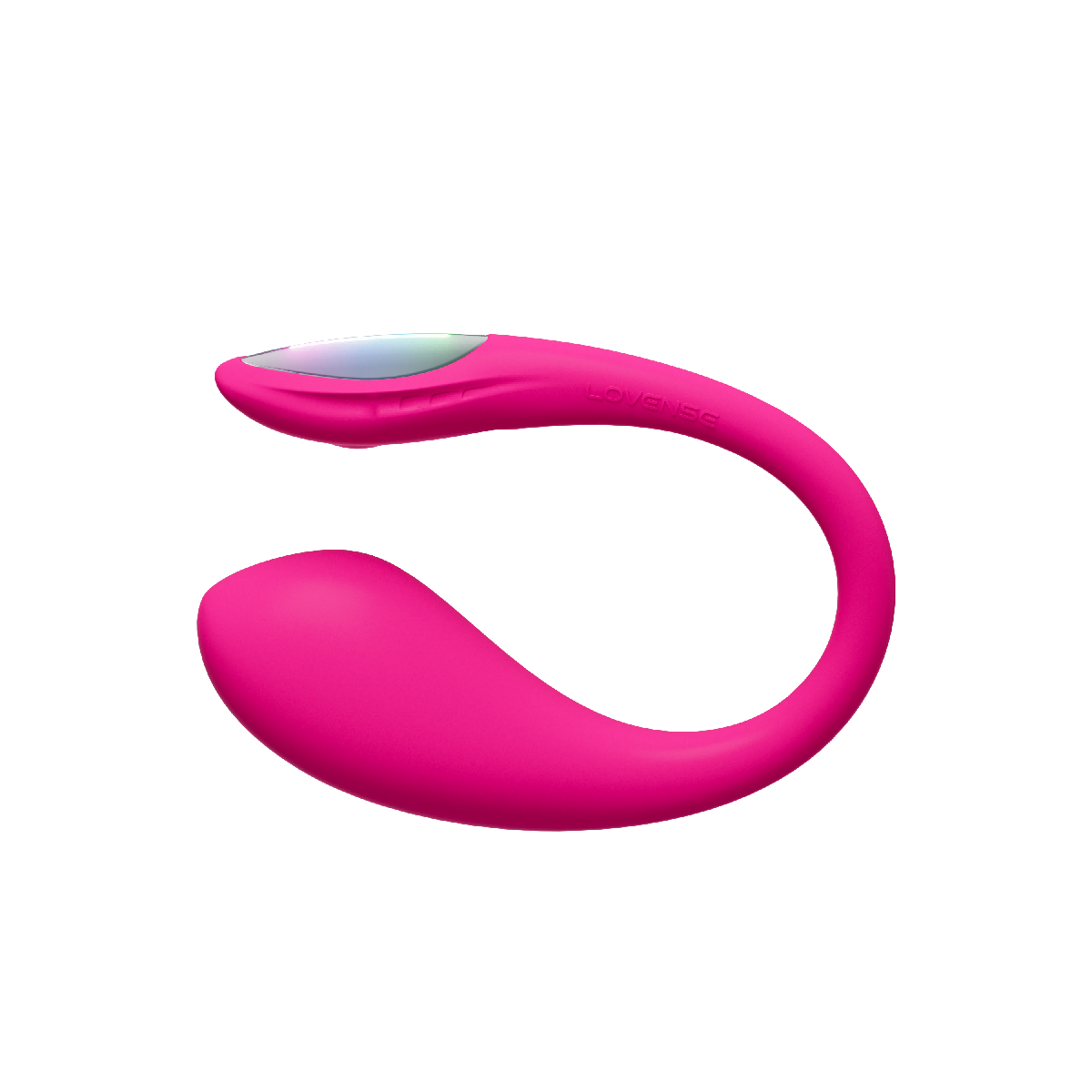
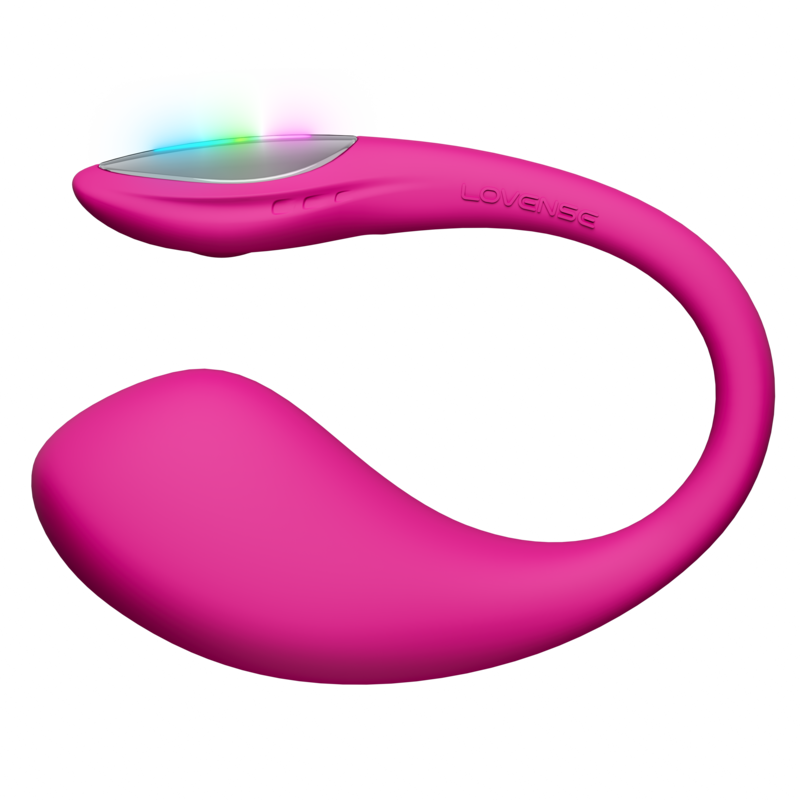
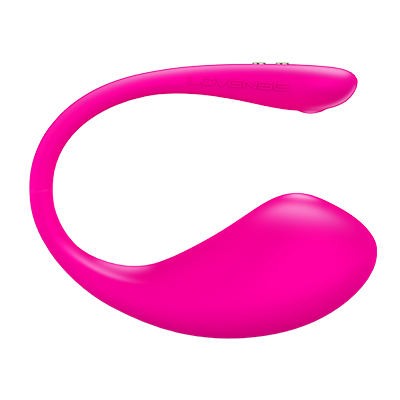
Blunt version: one of these shows up on a microphone at full power, and two basically don't. If being heard is a dealbreaker — public wear, thin walls, a hot mic on stream — this is the only comparison that matters. Full dB figures below, plus the one I'd actually trust to stay quiet.
🏆 Quietest overall
Lush Mini
Under 36 dB at max. Smallest head, smallest motor footprint. Near-inaudible in any normal environment.
Full analysis of each model's noise profile in real-world conditions.
🏆 #1 — Quietest model
Under 36 dB. Near-inaudible at any intensity.
The Lush Mini is the quietest Lovense Lush in the lineup. Its smaller 31mm head and brushless motor produce less vibration surface area than the full-size models, which translates directly to lower emitted sound. At maximum intensity it stays under 36 dB — roughly equivalent to a whisper at one meter — and at medium intensity it is functionally inaudible in any normal room with ambient sound.
This level of quietness makes the Mini the default recommendation for streaming with sensitive condenser microphones, use in shared living spaces, or any situation where audio discretion is essential. The trade-off is a shorter battery (3–5h vs Lush 4's 5–7h) and no LED. If noise is your single deciding factor and you don't need the Lush 4's extra features, the Mini wins by a narrow but consistent margin.
<36 dB max31mm headBT 5.03–5h battery
Bottom line: The quietest Lush. If silence is the priority and features are secondary, this is the pick.
The Lush 4 matches the Mini's noise level in every real-world test — both measure under 36 dB at maximum vibration. The tungsten-core motor is engineered to deliver higher RPM (7,000 vs 5,000) with less mechanical noise than the standard motor in the Lush 3. In a typical streaming or daily-use environment, the Lush 4 and Lush Mini are acoustically indistinguishable.
What makes the Lush 4 the stronger overall choice — even when noise is a concern — is the combination of near-silent operation with features the Mini lacks: LED tail glow visible on camera, 5–7 hour battery, and 5-minute rapid charge. At the same $129 price point, the Lush 4 is the better value unless the Mini's smaller head size is specifically what you need for comfort.
<36 dB maxLED glow7h batteryRapid charge
Bottom line: Same noise as the Mini, with better battery and LED. The best of both worlds at the same price.
~50 dB at max. Fine at low, problematic at full power.
The Lush 3 is noticeably louder than the other two models at maximum vibration. Its standard (non-tungsten) motor generates more mechanical noise, particularly at high RPM, reaching approximately 50 dB — roughly the level of a quiet conversation or a refrigerator running nearby. At low-to-medium intensity it is much quieter, but the noise increases meaningfully as vibration intensity climbs.
The 14 dB difference between the Lush 3 (~50 dB) and the Lush 4/Mini (<36 dB) is significant in acoustic terms — 14 dB represents roughly a 5× difference in perceived loudness. In practice, this means the Lush 3 is clearly audible in a quiet room at high intensity, and can be picked up by condenser microphones commonly used in streaming setups. At home, alone, at moderate intensity, it remains perfectly usable.
~50 dB max14 dB louder than rivalsBT 4.2$119
Bottom line: Fine at low intensity. At full power in a quiet room, the noise is real. Avoid if microphone use or shared spaces are a concern.
Noise tolerance varies by context. Here's which model is safe for each scenario.
Situation
Lush Mini
Lush 4
Lush 3
At home, alone
✓ Fine
✓ Fine
✓ Fine
Partner in the same room
✓ Near-inaudible
✓ Near-inaudible
⚠ Audible at high intensity
Shared apartment / thin walls
✓ Safe
✓ Safe
⚠ Low intensity only
Streaming with condenser mic
✓ Safe
✓ Safe
✗ Risk at high intensity
Recording video with audio
✓ Safe
✓ Safe
✗ Avoid at high intensity
Public use (wearing out)
✓ Safe at all levels
✓ Safe at all levels
⚠ Low intensity only
Office / quiet workplace
✓ Low intensity OK
✓ Low intensity OK
✗ Not recommended
What to Know
4 things that determine how loud a Lush is
Understanding these helps you pick the right model for your specific situation.
📊
What dB actually means
36 dB is a whisper at 1 meter. 50 dB is a quiet conversation or running refrigerator. The 14 dB difference between the Lush 3 and the Lush 4/Mini is not subtle — it represents roughly a 5× increase in perceived loudness. At 50 dB in a quiet room, you can clearly hear it from across the room.
⚙️
Motor type matters most
The Lush 4's tungsten-core brushless motor and the Mini's brushless motor are fundamentally quieter designs than the Lush 3's standard motor. They generate less mechanical vibration and friction at the same RPM, which is why they stay under 36 dB even at maximum intensity. Motor engineering, not just power level, drives the noise floor.
🎚️
Intensity vs noise
All three models are near-silent at low vibration. The Lush 3's noise problem only becomes significant at medium-to-high intensity. If you primarily use low settings, the Lush 3 is practically as quiet as the others. If you regularly use high intensity — for example, during tip-activated streaming peaks — the difference becomes very noticeable.
🎤
Your microphone type
Condenser microphones (common in streaming setups: Blue Yeti, HyperX, Rode NT-USB) are highly sensitive and can capture the Lush 3 at high intensity. Dynamic microphones (Shure SM7B, Audio-Technica AT2020 dynamic) are less sensitive and less likely to pick up the noise. A well-configured noise gate reduces the risk further — but the Lush 4 and Mini eliminate the problem at the source.
Buy direct from Lovense — discreet worldwide shipping
Model choice is the biggest lever — but these adjustments reduce noise risk regardless of which Lush you use.
🏆
Choose Lush 4 or Lush Mini
The single most effective noise reduction is choosing the right model. Lush 4 and Mini both measure under 36 dB at maximum — roughly 5× quieter in perceived loudness than the Lush 3's ~50 dB. If noise in any context matters to you, start here. Everything else is incremental.
📉
Use lower vibration intensity
All three Lush models are near-silent at low intensity — the noise difference between models is most pronounced at full power. If you use the Lush 3 and noise is a concern, keeping vibration below 70% intensity reduces its output significantly. The motor sound scales with RPM, not linearly — even a small intensity reduction makes a meaningful difference.
🎙️
Switch to a dynamic microphone
Condenser microphones (Blue Yeti, Rode NT-USB, HyperX QuadCast) are highly sensitive and will pick up the Lush 3 at high intensity. Dynamic microphones (Shure SM7B, Audio-Technica AT2005, Rode PodMic) have much lower sensitivity to background noise. If swapping models isn't an option, switching to a dynamic mic and adding a noise gate eliminates most of the risk.
🔇
Configure a noise gate
A noise gate in your streaming or recording software (OBS, Audacity, Adobe Audition) cuts audio below a set threshold. Set the threshold just above the motor's idle hum — around –40 dB works for most setups with a Lush 3. This won't eliminate the sound entirely but reduces it from an obvious artifact to something masked by your voice or ambient audio.
📍
Increase microphone distance
Sound attenuates with distance — doubling the distance between a sound source and a microphone reduces pickup by roughly 6 dB. If you stream with your microphone on a boom arm, positioning it further from your body increases the distance from the Lush and reduces how much motor noise it captures. Combined with a noise gate, this significantly lowers audible pickup.
🔋
Charge before use
A low-battery Lush can run less efficiently, with the motor working harder to maintain a set intensity — which can marginally increase noise output. Starting with a full charge ensures the motor operates at its design efficiency. For the Lush 4, the rapid charge feature means a 5-minute top-up is enough to restore optimal performance between sessions.
Sister site
Comparing Lovense masturbators?
HimCompare covers Max 2 vs Calor, Gush 2 vs Solace Pro, and every Lovense masturbator — same independent format, zero brand bias.
How I test this: the real-world calls come from living with these toys, cross-checked against Lovense's published specs and hundreds of verified-buyer reviews (I'm not a lab, so any figure that's Lovense's rating rather than something I observed stays labelled as a rating). The full method, sources and how I score is on my methodology page.
Affiliate disclosure: buy links are affiliate links — I earn a small commission at no extra cost to you, and it never changes which model I recommend (I regularly point readers to the cheaper one). — Victoria Andersen
FAQ
Lovense Lush noise — answered.
Every question about Lush noise levels, answered directly.
Which Lovense Lush is the quietest?+
The Lush Mini is technically the quietest model, measuring under 36 dB even at maximum vibration. The Lush 4 also measures under 36 dB and is essentially identical in practice — in most real-world listening tests the two are indistinguishable. Both are significantly quieter than the Lush 3, which reaches approximately 50 dB at maximum intensity. If noise is the deciding factor, either the Lush Mini or Lush 4 will serve you equally well. The Mini has a marginal edge due to its smaller motor footprint; the Lush 4 offers better battery life and LED at the same price. For a full comparison of all non-noise specs, see my Lush 4 vs Lush Mini guide.
How loud is the Lovense Lush 3?+
The Lush 3 reaches approximately 50 dB at maximum vibration — roughly comparable to a quiet conversation, a running refrigerator, or a soft radio in the next room. At medium intensity it is considerably quieter, around 38–42 dB, and at low intensity it is near-inaudible. The noise becomes a real consideration specifically at high vibration settings in quiet environments. In a typical room with ambient noise (air conditioning, street sound, background audio), the Lush 3 at medium intensity is generally not a problem. At maximum intensity in a silent room, it is clearly audible from across the space. For the full spec comparison, see my Lush 4 vs Lush 3 comparison.
Can a microphone pick up the Lovense Lush?+
It depends on the model and the microphone. The Lush 3 at maximum vibration (~50 dB) can be picked up by condenser microphones — particularly large-diaphragm condensers common in streaming and recording setups. The risk is highest at high tip intensities in a quiet room with the microphone positioned close to the body. Dynamic microphones are significantly less sensitive and less likely to capture the sound. The Lush 4 and Lush Mini both stay under 36 dB at maximum and are near-inaudible to all but the most sensitive microphones. A noise gate can help with the Lush 3, but does not eliminate the problem at maximum intensity — it only removes quieter background noise.
Is the Lush 4 louder than the Lush Mini?+
No — both measure under 36 dB at maximum vibration, and in direct comparisons they are acoustically indistinguishable for most listeners. The Lush 4's tungsten-core motor runs at 7,000 RPM vs the Mini's 5,000 RPM, which one might expect to produce more noise. However the tungsten-core design specifically reduces mechanical vibration and motor noise at higher speeds, keeping the sound profile near-identical to the Mini despite the higher power output. In practical terms: if noise is your concern, choosing between the Lush 4 and Mini should be based on battery life, LED, and comfort — not noise level, since they are effectively the same.
Is the Lovense Lush quiet enough for public use?+
The Lush 4 and Lush Mini are both genuinely quiet enough for most public situations at all intensity levels. Under 36 dB is essentially inaudible beyond a very short distance in any normal ambient environment — a shopping mall, restaurant, or street has background noise well above that level. The Lush 3 is manageable in public at low intensity but becomes risky at higher settings in quiet public environments such as cinemas, libraries, or quiet offices. For all three models, app-controlled use in public works best at low-to-medium intensity with the vibration running on smooth, lower-power patterns rather than sudden high-intensity bursts. My Lush on Chaturbate guide covers tip-activation patterns and streaming-specific setup in detail.
What does under 36 dB actually sound like?+
Under 36 dB is roughly equivalent to a whisper at one meter, rustling leaves, or a very quiet library reading room. At that level, the motor hum is masked by almost any ambient sound in a real-world setting — central heating, outdoor traffic, a TV in another room, or even quiet music playing at low volume. For reference, normal conversation is around 60 dB, so 36 dB is substantially quieter than speech. The 50 dB of the Lush 3 at maximum is closer to a refrigerator hum or a quiet conversation in the next room — clearly audible in a truly silent environment, though easily masked by modest ambient noise.
Does the Lush noise level change at different vibration intensities?+
Yes, significantly for all three models. At low vibration intensity, all three Lush models are near-inaudible — the motor runs at low RPM and generates very little sound. As intensity increases, the Lush 3's noise increases meaningfully, reaching ~50 dB only at maximum. The Lush 4 and Lush Mini also increase slightly in volume as intensity rises, but stay under 36 dB even at their peak — the increase is far less pronounced. If you primarily use lower vibration settings (which many users prefer for sustained sessions), the noise difference between models is much less noticeable than the maximum-intensity figures suggest.
Which Lush should I buy if noise is my top priority?+
If noise is the single deciding factor, either the Lush Mini or Lush 4 will serve you equally well — both stay under 36 dB at all intensity levels. The Lush Mini has a marginal practical edge due to its smaller 31mm head and motor area. The Lush 4 matches it acoustically but adds LED tail glow, a longer 5–7 hour battery, and 5-minute rapid charge at the same $129 price. Unless you specifically need the Mini's smaller size for comfort during extended wear, the Lush 4 gives you silence plus every other advantage. The Lush 3 at $119 is $10 cheaper but is noticeably louder at high intensity — for most users, the $10 saving is not worth the noise trade-off if discretion matters.
Was this comparison helpful?
Thanks for your feedback ✓
Ready to Choose?
Pick your Lush. Discreet shipping from Lovense.
Lush 4 and Mini: near-silent at all intensities. Lush 3: quieter at low settings.